
Most people over 60 who buy dumbbells make the same mistake. They pick a pair that looks sensible in the store, then find it’s too heavy to lift overhead and too light to make their legs do anything. A month later the pair is a doorstop.
You don’t need one pair. You need two, sometimes three, and a simple way to tell which one each exercise needs. This guide gives you that, plus eight dumbbell exercises for seniors you can do at home with a chair and a kitchen counter. If you’d like someone to pick the weights and watch your form in person, a Trainer Pro personal trainer for seniors comes to your home or condo gym anywhere in Toronto and the GTA.
How Heavy Should Hand Weights Be for Seniors?
Heavy enough that the last two or three reps of a set of 10 to 15 feel hard, while your form stays clean. That’s the whole rule. The number on the dumbbell matters less than how the final reps feel.
A quick test: pick a weight and do the exercise slowly. If you could easily do 20, it’s too light. If you can’t get to 10 without your back arching, your shoulders shrugging or the weight swinging, it’s too heavy. If reps 12 to 15 slow down but still look the same as rep one, you’ve found it.
Different exercises need different weights. Your legs and back are much stronger than your shoulders and arms, so a pair that’s right for a curl will barely register in a squat. These are typical starting points for someone new to weights. Treat them as a place to begin testing, not a target.
| Exercise type | Typical starting weight (each hand) |
|---|---|
| Shoulders and triceps (raises, overhead work) | 1 to 3 lb (0.5 to 1.5 kg) |
| Biceps curls and rows | 3 to 8 lb (1.5 to 3.5 kg) |
| Legs and carries (squats, deadlifts, step-ups) | 5 to 15 lb (2.5 to 7 kg), often one dumbbell held in both hands |
If you’ve had a shoulder injury, arthritis in your hands or wrists, or haven’t lifted anything heavier than groceries in years, start at the bottom of each range. Going up later is easy. Recovering from a sore shoulder takes weeks.
Which Dumbbells to Buy
Two pairs cover most people at the start: a light pair for arms and shoulders (2 to 3 lb) and a medium pair for rows and legs (5 to 8 lb). Add a single heavier dumbbell, around 10 to 15 lb, once squats and deadlifts with the medium pair start to feel easy.
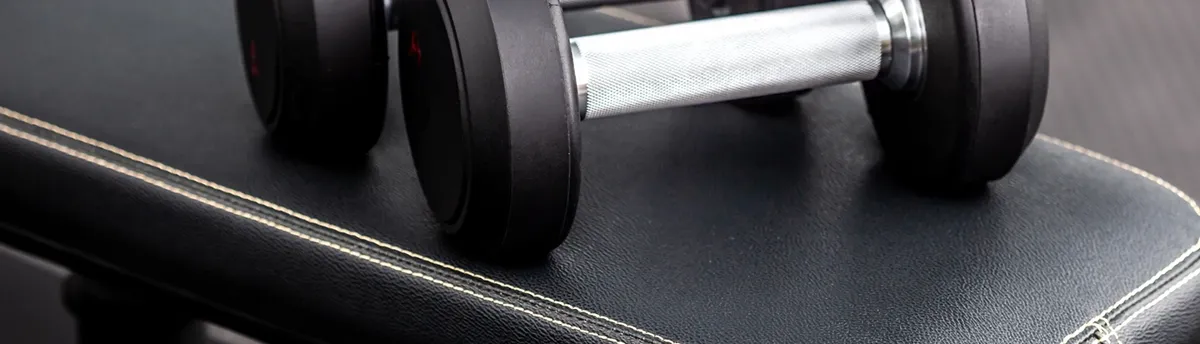
Rubber or neoprene-coated dumbbells with a hexagonal end are the practical choice. They don’t roll across the floor, they won’t mark a hardwood floor in a condo, and the coating is easier to grip if your hands get cold or stiff. Adjustable dumbbells save space, but changing the plates can be fiddly for arthritic fingers. If you already have a building gym with a dumbbell rack, use that and skip the shopping.
Water bottles and milk jugs work for the first week or two. A 1 litre bottle weighs about 2.2 lb. They just get awkward to hold once you need more than that.
Before You Start
If you have a heart condition, high blood pressure that isn’t under control, recent surgery, or you’ve had chest pain or dizziness during exercise, talk to your doctor before starting a weight routine. The same goes for any joint replacement in the last year.
Set up near a sturdy chair without wheels and a kitchen counter you can hold. Wear shoes with a grip, not socks. Breathe out as you lift and in as you lower. Holding your breath while you lift pushes your blood pressure up for no benefit.
8 Dumbbell Exercises for Seniors
Do these in order, one set each, then rest a minute and repeat. Start with one round, build to two or three over a few weeks. Each exercise lists an easier version if the standard one is too much.
1. Goblet Squat to a Chair
Hold one dumbbell upright against your chest with both hands. Stand in front of a chair, feet a little wider than your hips. Sit back slowly until you touch the seat, pause without fully relaxing, then stand up by pushing through your heels. Do 10 to 12 reps. Easier: do it without the weight and use your hands on your thighs to help you stand.
2. Chair-Height Deadlift
Put a dumbbell on the seat of a chair. Stand facing it, feet hip-width apart. Push your hips back, keep your back flat and bend your knees slightly as you reach down to grip the dumbbell, then stand up tall by squeezing your hips forward. Lower it back to the seat the same way. Do 10 reps. Lifting from a chair instead of the floor means you only go as low as your back is ready for. This is the movement you use to pick up a laundry basket.
3. Counter-Supported One-Arm Row
Put your left hand on the kitchen counter and step your right foot back. Hold a dumbbell in your right hand with your arm hanging straight. Pull your elbow back toward your hip, squeeze your shoulder blade, and lower slowly. Do 10 to 12 per arm. Rows work the muscles that hold you upright, which matters if you’ve noticed your shoulders rounding forward.
4. Step-Up With Rail
Use the bottom stair. Hold the banister with one hand and a light dumbbell in the other. Step up with your right foot, bring your left foot up to meet it, then step down right foot first. Do 8 to 10 leading with each leg. Easier: no dumbbell, and hold the rail with both hands. Stairs are where a lot of falls happen at home, so this one is worth the effort.
5. Hammer Curl
Stand or sit tall with a dumbbell in each hand, palms facing each other. Bend your elbows to bring the weights up toward your shoulders, keeping your elbows close to your sides, then lower slowly over a count of three. Do 12 reps. The neutral grip is easier on the wrists than a regular curl.
6. Seated Overhead Triceps Extension
Sit near the front of a chair. Hold one light dumbbell with both hands and lift it straight overhead. Bend your elbows to lower it behind your head, keeping your upper arms close to your ears, then straighten your arms. Do 10 to 12 reps. Skip this one if raising your arms overhead pinches your shoulder; do the hammer curl with a slower lowering instead.
7. Suitcase Carry
Hold one dumbbell at your side like a suitcase. Stand tall, don’t lean toward the weight, and walk slowly for 20 to 30 steps, staying close to a wall or counter. Switch hands and walk back. Carrying weight on one side makes your core and hips work to keep you level, which is the same job they do when you carry a bag of groceries up the driveway.
8. Counter-Supported Calf Raise
Hold the counter with one hand and a dumbbell in the other. Rise up onto the balls of your feet, pause for a second at the top, and lower slowly. Do 15 reps. Stronger calves help with walking speed and catching yourself when you trip. Easier: do it without the weight.
How Often to Train
Twice a week is enough to get stronger, and three times is fine once you’ve settled in. Canada’s 24-Hour Movement Guidelines for adults 65 and older recommend muscle-strengthening activities using the major muscle groups at least twice a week, along with activities that challenge balance. Leave a day between sessions so your muscles can recover. A Monday and Thursday routine is easy to remember.
On the days in between, walk, do some balance work, or try our strength training routine for seniors with bands and bodyweight moves to round out the week.
When to Go Heavier
Trainers often use a simple rule: when you can do two more reps than your target on the last set, two sessions in a row, move up to the next weight. If the target is 12 and you’ve done 14 twice, it’s time.
Go up by the smallest jump you can, usually 1 to 2 lb for arms and 2 to 5 lb for legs. Your reps will drop back to 8 or 10 with the new weight. That’s normal. Build back up to 12 to 15 and repeat.
Moving slower makes a light weight harder without buying anything. Take three seconds to lower each rep and you’ll feel the difference in a set of curls straight away.
Signs to Stop
Stop and sit down if you feel chest pain or pressure, dizziness, unusual shortness of breath, or a sharp pain in a joint. Muscle tiredness and a mild ache the next day are normal. Pain that’s sharp, sudden or gets worse as you keep going is not. If something hurts the same way two sessions in a row, get it checked before carrying on.
Common Questions
Is it safe for a 70-year-old to lift weights? For most people, yes, and it’s one of the better things you can do for staying independent. Start light, move slowly, and get your doctor’s go-ahead first if you have a heart condition, uncontrolled blood pressure or a recent surgery.
What weight dumbbells should a senior woman use? Many women start with 2 to 3 lb for shoulder and arm work and 5 to 8 lb for rows and legs. Use the rep test above rather than a number, because two women of the same age can be very different in strength.
Are 1 lb weights worth it? For overhead and shoulder raises at the very start, yes. For most other exercises, 1 lb is too light to make a difference for long. Treat it as a first step, not where you stay.
Can I do these exercises sitting down? The curl, the triceps extension and the row (seated, leaning forward slightly) all work from a chair. The squat, deadlift, step-up and carry need you on your feet, so use the easier versions until standing work feels steady.
When a Trainer Helps
Most of the risk with weights comes from the details you can’t see yourself: an elbow drifting forward in the curl, a back that rounds a little more each week in the deadlift, a weight that should have gone up a month ago and didn’t.
A Trainer Pro trainer comes to your home or your building gym, checks how you move before adding any weight, and works with the dumbbells you already own. Family members are welcome on the first consultation, sessions run 6 a.m. to 10 p.m., seven days a week, depending on trainer availability, and the first session is free.