
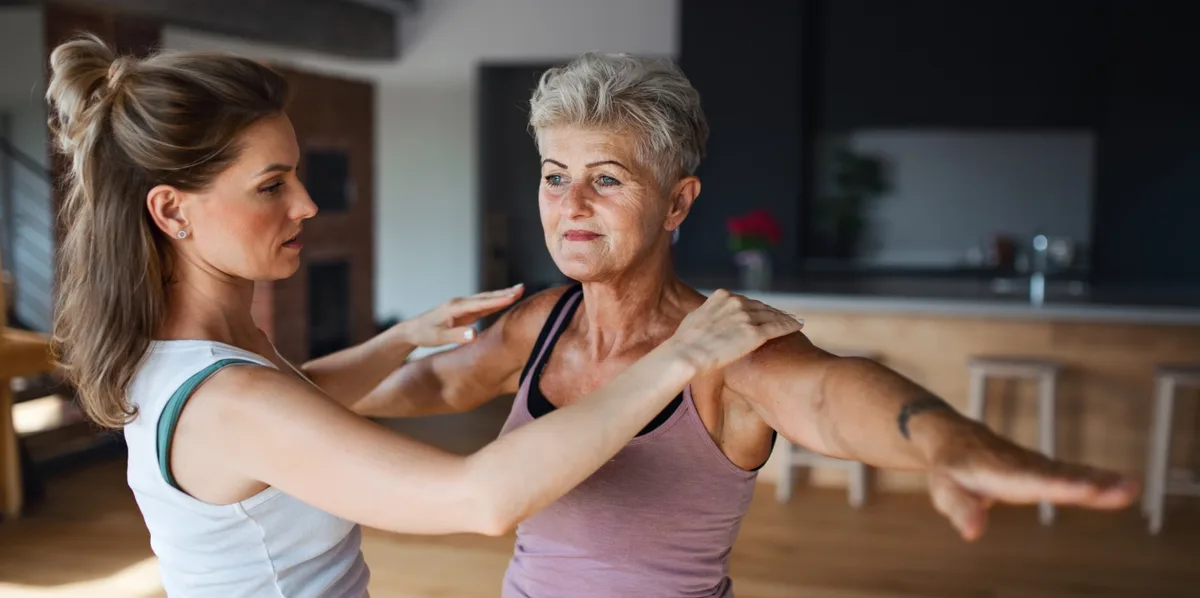
A lot of falls don’t happen on ice or ladders. They happen at home, turning too fast from the stove or stepping out of the shower with one hand full. Balance is the skill behind all of those small moments, and like leg strength, it fades quietly when nobody trains it.
The good news is that easy exercises for seniors work. All it takes is a kitchen counter and a sturdy chair, plus ten minutes most days. Nothing on this list involves the floor, jumping or equipment you’d have to buy. If you’d rather have someone beside you for the first few weeks, Trainer Pro offers personal training for seniors at home or in your building’s gym.
What Are the Best Exercises for Seniors?
The best exercises for seniors are the ones you’ll actually do most days. That sounds like a dodge, but it’s how balance works. A hard workout once a week does less for your balance than five minutes every morning, because balance is a skill your brain practises, more like typing than like lifting.
Canada’s 24-Hour Movement Guidelines for adults 65 and older, from the Canadian Society for Exercise Physiology, list physical activities that challenge balance as their own category, separate from walking and strength training. Most people over 70 do some walking. Very few practise standing on narrow footing on purpose, and that’s the gap this routine fills.
Set Up Before You Start
Do every standing exercise at the kitchen counter, facing it, with your hands resting on the edge. Wear supportive shoes or go barefoot on a non-slip floor. Socks on hardwood are a bad idea. Clear anything you could trip over, and if you’re nervous about a new exercise, try it the first time when someone else is home.
Talk to your doctor first if you’ve had a fall in the past year, get dizzy when you stand up, or have an inner-ear problem. You can usually still do this routine, but you may need to start seated.
How much to hold on is the real progression. Start with both hands on the counter. When that feels easy, use one hand, then fingertips, then hover your hands just above the edge so you can grab it if you need to.
Balance Exercises for Seniors
These six are the core of the routine. Do them in order, because each one asks a little more of your balance than the one before.
1. Weight Shifts
Stand with your feet hip-width apart. Slowly shift your weight to your right foot until your left foot feels light, hold for a few seconds, then shift to the left. After eight shifts each way, try forward and back, from heels to toes. It looks like nothing. It teaches your ankles to make the small corrections that keep you upright.
2. Feet-Together Stand
Stand with your feet touching, side by side, and hold for 30 seconds. If that’s steady, close your eyes for 10 seconds while keeping your hands on the counter. Your eyes do a lot of the balancing for you, so taking them away for a moment makes your legs and inner ear work harder.
3. Semi-Tandem and Tandem Stance
Place one foot half a step ahead of the other, with the heel of the front foot beside the big toe of the back foot. Hold for 30 seconds, then switch. Once that’s easy, line your feet up heel to toe, as if you were standing on a tightrope. This is one of the best balance exercises for seniors because it narrows your base, the same thing that happens when you step around a chair or walk a narrow hallway.
4. Heel-to-Toe Walk
Walk along the counter, placing each heel directly in front of the opposite toes. Keep your eyes on a point ahead of you rather than on your feet. Ten steps, turn carefully, ten steps back. When the counter runs out, a hallway where you can touch the wall works too.
5. Side Steps
Facing the counter, step sideways to the right for five or six steps, then back to the left. Keep your toes pointing forward and don’t let your feet cross. Moving sideways is something most of us rarely do, and it’s often the direction people lose their balance in.
6. Standing Head Turns
Stand with your feet hip-width apart and slowly turn your head to look over your right shoulder, then your left. Do five each way, then look up and down. If you feel dizzy, stop and sit. This trains the inner-ear part of balance, which matters every time you check behind you before crossing a parking lot.
Easy Seated Exercises for Days You’re Tired
Not every day is a standing day. These chair exercises for seniors keep you moving on low-energy days, and they’re a good warm-up before the balance work. Sit near the front of a sturdy chair with no wheels, feet flat on the floor.
7. Seated Marching
Lift one knee towards your chest, lower it, then lift the other. Swing your arms as if you were walking. Thirty seconds to a minute is enough to warm up your hips.
8. Ankle Circles
Lift one foot slightly off the floor and draw ten slow circles with your toes in each direction, then switch feet. Stiff ankles make it harder to recover from a stumble, and this is the easiest way to keep them moving.
9. Seated Torso Twist
Cross your arms over your chest and slowly turn your upper body to the right, keeping your hips facing forward. Return to the centre and turn left. Five each way, without forcing it. It’s the movement you need to reach a seatbelt or look behind you while reversing.
10. Overhead Reach
Sit tall and reach one arm up towards the ceiling, as if taking something off a high shelf, then lower it and reach with the other. Ten reaches in total. Keep it pain-free; if your shoulder pinches, reach forward instead of up.
A 10-Minute Daily Routine
If you only remember one part of this article, make it this. Five exercises a day, in this order:
- Seated marching, 1 minute
- Weight shifts, 8 each direction
- Semi-tandem or tandem stance, 30 seconds each side
- Heel-to-toe walk, 10 steps there and back
- Side steps, 5 each way, twice
That’s around ten minutes, and you can do it while the kettle boils. On days with more energy, add the head turns and the rest of the seated exercises. Pair it with strength work two or three times a week, because balance and leg strength depend on each other. Our leg strengthening exercises for seniors cover that side, with sit-to-stands, calf raises and step-ups.
How to Make It Harder Over Time
Change one thing at a time and stay with it for a week or two before the next change. Use less hand support. Hold each stance longer, from 30 seconds up to a minute. Close your eyes during the feet-together stand. Try the heel-to-toe walk while turning your head slowly from side to side.
Easy balance exercises for seniors should stay a little challenging. If you never wobble, the exercise isn’t teaching your body anything new. If you wobble so much that you grab the counter every few seconds, step back to the previous version.
When to Stop
Stop and sit down if you feel dizzy or short of breath, or if the room seems to spin. Tell your doctor if the dizziness keeps coming back. A bit of wobbling is part of the exercise. Feeling unwell isn’t.
When a Trainer Helps
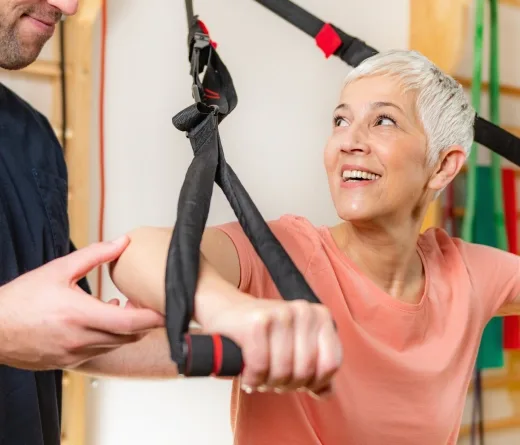
Plenty of people do these exercises for seniors at home on their own and do fine. A trainer earns their place when you’ve already had a fall and no longer trust your balance. It also helps if you’ve tried a routine like this before and stopped after a week.
A Trainer Pro trainer comes to your home or your condo gym, watches how you move and adjusts each exercise so it’s hard enough to help without putting you at risk. Family members are welcome on the first call. Sessions run from 6 a.m. to 10 p.m., seven days a week, depending on trainer availability, and the first session is free.