
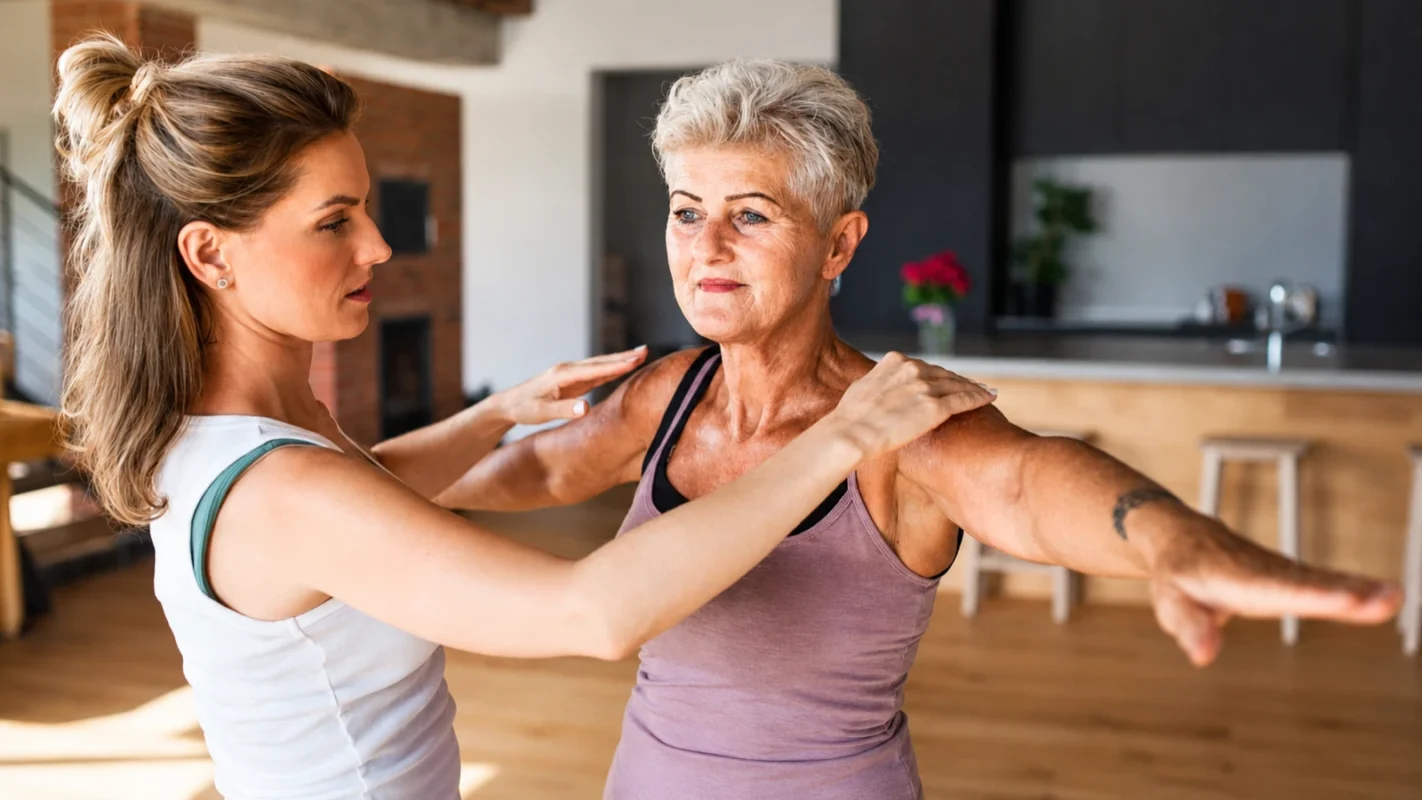
In 1990 a research team put ten nursing home residents on a supervised strength program. Their average age was 90, and several needed a cane or walker to get around. After eight weeks of training three times a week, their leg strength had more than doubled on average, and two of them stopped using their canes.
That study, led by Maria Fiatarone and published in JAMA, is the usual answer to the question people are really asking when they ask whether personal training is good for seniors. They’re asking whether it’s too late. Usually it isn’t.
Is Personal Training Good for Seniors?
Yes for most older adults, and the benefit tends to be larger than it would be for someone in their thirties, because there is more lost ground to recover. The qualifications are about sequencing and supervision rather than age.
Two things make it a good spend specifically for this group. Older adults usually arrive with a list of conditions that change exercise selection, and that list is exactly what a group class cannot accommodate. And the goals that matter at 75 are measurable in a way that aesthetic goals never are, so you can tell within a couple of months whether it is working. Coaching for older adults is organized around that second point.
What Starting Late Changes
Muscle mass declines steadily from midlife, and the rate accelerates after 60. The common assumption is that this is a one-way process and that training can slow it at best.
The evidence doesn’t support that reading. Older muscle responds to resistance training, including in people well into their eighties and nineties, which is what made the 1990 study notable at the time. The adaptation is slower than it would have been at 40 and it requires more recovery between sessions, and it still happens.
What changes with age is the margin for error. A 35-year-old who trains badly for a month gets sore and loses a few weeks. An 80-year-old who trains badly can end up with a tendon problem that takes a season to settle, or a fall that changes everything about their independence. The upside is larger and so is the downside, which is the real argument for supervision.
Which Benefits Show Up First
The ones people notice earliest are rarely the ones on the brochure.
Getting out of a low chair without planning it. Carrying one bag of groceries in each hand instead of making two trips. Sleeping through the night more often. Reaching the top shelf without a stool. These start appearing within six to ten weeks, and they’re usually what people mention first when you ask what’s different.
The slower benefits are the ones that matter more over a decade: maintained muscle mass, better glucose handling, bone that keeps loading, and the confidence to keep doing things that would otherwise get dropped one by one. Confidence sounds soft until you watch someone stop going to a grandchild’s school concert because the parking is far from the door.
What personal training is not good for is weight, at least not on its own and not quickly. If the entire goal is a number on a scale, the money is better spent elsewhere first.
Why Supervision Matters More at 70 Than at 30
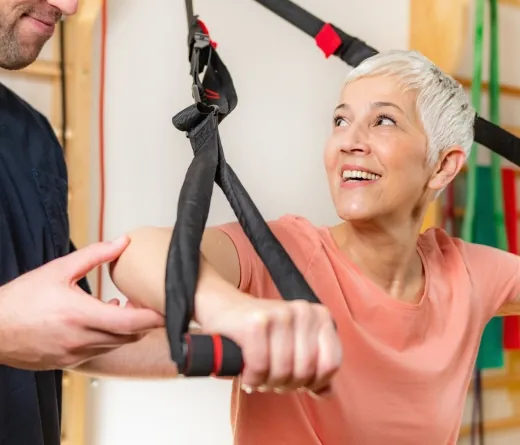
A healthy 30-year-old can follow a generic program from the internet and mostly get away with it. Older adults usually can’t, for three practical reasons.
Conditions change exercise selection. A replaced knee, spinal osteoporosis, a shoulder that has never been the same since a fall, glaucoma, blood pressure medication that makes standing up quickly a problem. Each of those rules some things out and makes others more valuable. Figuring that out from a video is guesswork.
Progression needs judgment. Load has to go up for anything to change, and it has to go up more carefully than it would for a younger client. Someone has to watch the movement and decide, which is the part no app does well.
Compensations hide. People work around a stiff hip or a weak side without knowing they are doing it, and a program that lets that continue reinforces the imbalance. Catching it takes an eye on the movement.
Group classes solve the cost problem and not the first or third of these. For many people the honest answer is a mix: a few months of one-on-one to build a base and sort out the modifications, then something cheaper to keep it going. That could be a small group class, or semi-private sessions with a spouse or friend, which at Trainer Pro start from $91 CAD an hour for the pair.
Training at Home After 70
For a lot of older adults, the best gym is the living room. There’s no drive, no parking and no icy sidewalk in January between you and the session, which matters when a fall on the way to exercise is the very thing you’re training to prevent.
Home is also where the real tasks happen. A trainer who comes to you can practise getting up from your own couch, the stairs you actually climb and the step into your tub, and will notice the loose rug or the dim hallway while they’re there.
Trainer Pro’s trainers come to homes and condo gyms across Toronto, North York, Mississauga, Etobicoke, Scarborough, Vaughan, Richmond Hill, Markham and Oakville. Which trainer you’re matched with depends on availability in your area, and that’s confirmed on the first call.
When a Personal Trainer Is the Wrong First Step
Three situations call for someone else first.
If you have pain that is new, worsening, or waking you at night, see your physician before hiring anyone. Trainers are not diagnosticians, and a good one will send you away.
If you are recovering from a surgery or an injury and still in active rehabilitation, your physiotherapist leads and the trainer follows. Starting a parallel program is how people end up doing contradictory things twice a week. Once your physiotherapist discharges you, that is the right time to bring a trainer in for the handover.
If you’ve had unexplained dizziness, chest symptoms on exertion, or fainting, get that checked by your doctor before anything else.
Training is still on the table in all three cases. It just comes second.
The Goal Changes Between 50, 70 and 85
Lumping everyone over 50 into one category is the main flaw in most senior fitness advice.
For adults in their fifties and sixties, the job is usually building a reserve while it is still easy to build. Most people in this group can train close to how a younger adult would, with sensible attention to joints that have accumulated some mileage. This is the cheapest decade in which to do it.
In the seventies, the emphasis shifts to holding the capacity you have and protecting independence. Progress gets slower and consistency gets more valuable. Most people here do best with two supervised sessions a week and something light on the other days.
Past 80, the goal is usually specific and functional: getting off the floor, managing stairs at home, carrying things, staying out of hospital. Sessions get shorter, rest gets longer, and the measures of success are daily tasks. The 1990 study is a reminder that meaningful gains are still available in this decade.
When the Family Is Buying the Sessions
Consider a composite that comes up constantly. A daughter in Agincourt worries about her father, who is 78 and has stopped going out much since her mother died. She books and pays for ten sessions, tells him about it afterwards, and he attends four of them before finding reasons not to continue.
Nothing about her intention was wrong. What failed was that the training was her project rather than his. Sessions bought for someone who hasn’t agreed to them have poor attendance.
If you’re arranging training for a parent, let them be in the first conversation with the trainer and ask their own questions, even if you’re paying. Anchor the goal to something they’ve said they miss. A father who wants to get back to his Don Mills walking group will train for that. He won’t train for your peace of mind.
Start small. Trainer Pro’s first session is free, so your parent can meet the trainer before anyone commits to a package. And agree at the start who the trainer reports to. Most older adults are competent adults who would rather their progress was discussed with them and not relayed to a family member, and a trainer who treats the person paying as the client gets this wrong quickly. If your parent is happy for you to be updated, have them say so in front of the trainer.
Finding Out Whether It Fits
The useful first step is an assessment with baseline measures, so the question stops being theoretical. Six weeks later the numbers either moved or they did not, and that is a better basis for deciding than any article.
Book a free first session with a senior fitness trainer and bring a list of current conditions and medications, any surgical history, and one thing you’d like to be able to do again.