
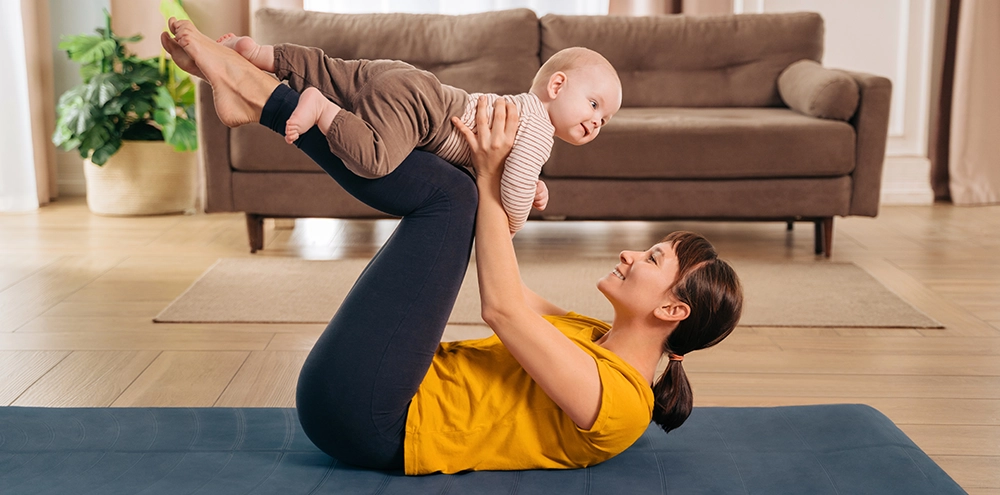
Most new mothers get one piece of exercise advice: wait for your six-week check. Then the appointment comes, someone says you’re cleared, and you’re standing in the kitchen with a baby on your hip wondering what “cleared” means. Can you run? Do crunches? Pick up the kettlebell that’s been in the closet since your second trimester?
The six-week check tells you you’ve healed enough to start. It doesn’t tell you where to start. That part is a plan, and a good postpartum workout plan starts smaller than most people expect.
This guide covers it in three phases and assumes a healthy recovery. If you had a complicated birth, a third- or fourth-degree tear, heavy bleeding, or anything your doctor or midwife flagged, their advice comes first. The same goes for Trainer Pro’s postpartum personal training: your care providers set the limits and the program works inside them.
When Can You Start a Postpartum Workout?
Sooner than six weeks for some of it. Later for the rest.
After an uncomplicated vaginal birth, breathing work, pelvic floor contractions and short walks can usually start within days, as long as they feel fine. Six weeks is when most care providers in Ontario do a postpartum check, and it’s the usual point to add structured exercise.
A C-section changes the timeline. It’s major abdominal surgery, and the common advice is to avoid lifting anything heavier than your baby for about six weeks while the incision and the layers underneath it heal. Walking is still encouraged early. Anything that loads your abdomen waits.
Running and jumping wait longest. The UK return-to-running guideline written by physiotherapists Tom Goom, Gráinne Donnelly and Emma Brockwell in 2019 recommends no running before 12 weeks postpartum, and only once a few basic strength and impact tests feel easy. More on those below.
The First Six Weeks: Breathing, Pelvic Floor and Walking
This phase barely looks like exercise, which is why people skip it. Everything later is built on it.
Start with breathing. Sit supported or lie on your back, put your hands on your lower ribs, and breathe in so your ribs widen sideways and your belly rises. As you breathe out, gently lift your pelvic floor, the way you’d stop yourself passing wind, and draw your lower belly in a little. On the next breath in, let it all go. Five to ten slow breaths, a few times a day. Feeding time works.
The letting go matters as much as the lift. A pelvic floor that’s held tight all day causes its own problems, and a lot of new mothers clench without noticing.
Walking is the other half. Ten minutes around the block with the stroller is a fair first goal. Add a few minutes every few days if your bleeding doesn’t increase and nothing feels heavy or sore. By six weeks, plenty of women are walking 30 minutes without thinking about it.
Heel slides and pelvic tilts on the floor, a handful of each, keep your back and hips from stiffening up. And watch how you feed. Hours a day hunched over a baby is its own workout, so bring the baby up to you with a pillow instead of folding down to them.
A Postpartum Workout Plan for Weeks 6 to 12
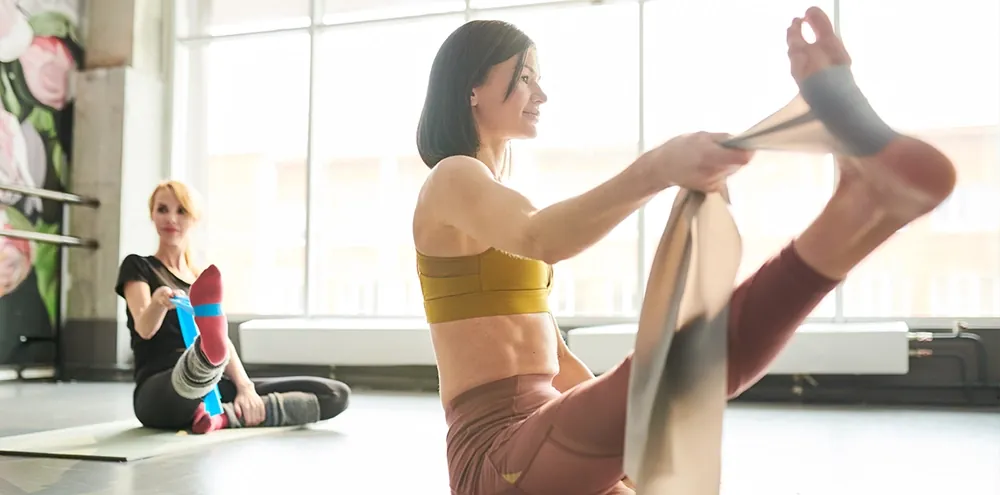
Once you’ve had your check and been cleared, real strength work can start. Real doesn’t mean heavy. It means two or three short sessions a week, 20 to 30 minutes each, built around movements you’ll use for years.
A starting postpartum exercise program might look like this:
- Glute bridges, 2 sets of 10, breathing out as you lift
- Side-lying clamshells with a light band, 2 sets of 12 each side
- Sit-to-stand from a chair or couch, 2 sets of 8 to 10
- Incline push-ups against a kitchen counter, 2 sets of 8
- Band rows or a single dumbbell row, 2 sets of 10 each side
- Dead bug heel taps, 2 sets of 6 each side, keeping your low back still and your belly flat
The sit-to-stand is the squat you already do dozens of times a day getting in and out of the glider. Doing it slowly and on purpose is what turns it into training. Plenty of women do their first bridges with the baby sitting on their hips, which is fine once you’re steady in the position.
If a set feels easy two sessions in a row, add two reps or a bit more resistance. If something causes leaking, heaviness or pain, drop that exercise for now rather than pushing through.
If you’re breastfeeding, moderate exercise doesn’t reduce milk supply for most women. Feeding or pumping before a session makes it more comfortable. On a night when you got three hours of sleep, a walk is a perfectly good workout.
Weeks 12 and Beyond: Adding Weight and Impact
By three months, most women with an uncomplicated recovery can train much like anyone coming back after a long break, with weight going up gradually. Goblet squats, dumbbell Romanian deadlifts, split squats, rows and overhead presses all fit here. Two or three sessions a week is plenty.
Impact is a separate question. Before running or jumping, the 2019 guideline suggests checking that you can walk for 30 minutes, balance on one leg for 10 seconds, do 10 single-leg squats on each side, jog on the spot for a minute and hop 10 times on each leg, all without pain, heaviness or leaking. If those feel fine, short walk-jog intervals are a sensible start. If they don’t, the pelvic floor usually needs more work first, and a pelvic health physiotherapist is the right person to check.
Low-Impact Cardio After Birth
Walking covers most of it for the first couple of months. Once you’re cleared, a stationary bike, an elliptical or a brisk stroller walk up a hill raises your heart rate without the bouncing that running puts through the pelvic floor. Swimming usually waits until bleeding has stopped and any stitches or incision have healed, which your care provider can confirm at your check.
Canada’s physical activity guidelines suggest adults build toward 150 minutes of moderate activity a week, and that target doesn’t change after a baby. It just takes longer to reach. Three 20-minute stroller walks and two short strength sessions get you most of the way there.
Your Core After Birth: Diastasis and the Postpartum Ab Workout
Your abdominal muscles stretch apart along the midline during pregnancy, and for many women the gap is still there weeks later. It’s called diastasis recti, and it’s common. A Norwegian study of 300 first-time mothers found it in 60% of women six weeks after birth and in about a third a year later.
The width of the gap matters less than how the midline handles pressure. If your belly domes or cones down the middle when you sit up, lift or do a crunch, that tissue isn’t managing the load yet. Swap the exercise for one where your belly stays flat, like dead bug heel taps or bird dogs, and come back to it later.
So, crunches. They aren’t banned. An early postpartum ab workout is mostly breathing, heel taps and holds on all fours. Crunches and planks come back once you can do them without doming, and for most women that happens within a few months.
Signs to Stop and Get Checked
Pause and talk to your doctor, midwife or a pelvic health physiotherapist if you notice:
- leaking urine when you cough, laugh, lift or jump
- heaviness, bulging or a dragging feeling in the vagina, especially later in the day
- bleeding that gets heavier or turns bright red again after activity
- pain in your pelvis, low back or C-section scar that’s getting worse
- doming down the middle of your belly that isn’t improving
Leaking is common after birth, and it’s treatable. Pelvic health physiotherapists work in clinics across the GTA, and an assessment tells you what your pelvic floor actually needs instead of leaving you to guess.
Fitting Workouts Around a Newborn
The plan above isn’t hard. Doing it is. Sleep comes in two-hour pieces, the baby decides when the day starts, and getting to a gym means a car seat, a diaper bag and a stroller that never folds the way the video promised.
That’s why the most realistic postpartum workout is short and happens at home. Twenty minutes during a nap counts. So do two ten-minute pieces. Keep a mat and a band where you’ll see them.
Here’s a composite of a common story. A first-time mother in Port Credit is cleared at her six-week check, buys a gym membership and goes twice in a month, because every planned session collides with a feed. At four months she switches to sessions in her living room at 1 p.m., during the longest nap of the day. The exercises are the same ones she’d have done at the gym. She just stopped needing a free 90 minutes to do 30 minutes of training.
Exercise tends to help with mood in the first months, and there’s good evidence it eases symptoms of postpartum depression. It isn’t a treatment on its own, though. If low mood, anxiety or feeling disconnected from your baby lasts more than a couple of weeks, tell your doctor or midwife.
When a Postpartum Personal Trainer Helps
Plenty of women do this alone with a good plan. A trainer earns their place when you aren’t sure what you’re feeling, when an old injury complicates things, or when planning is the one thing you don’t have energy left for.
A good postpartum personal trainer works alongside your care providers. They won’t diagnose a diastasis or treat a prolapse. They build the program around what your doctor, midwife or physio has told you, watch how your body responds to each exercise, and adjust week to week so you’re progressing without guessing.
At Trainer Pro, the trainer comes to your home or your condo gym, so sessions fit around naps instead of the other way round. You can ask for a female trainer. Sessions run from 6 a.m. to 10 p.m., seven days a week, and one-on-one sessions start at $68 CAD for a one-hour session. There’s no set date for starting: we work that out with you on the initial call, based on your birth and how your recovery is going. If you’re reading this while still pregnant, start with our trimester-by-trimester prenatal workout plan.
Book a free postpartum consultation and tell us how your recovery is going and anything your doctor, midwife or physio has said.